
If you manage an apartment building, mixed-use property, or townhome complex in Hudson County, you already know that one rodent sighting rarely stays one rodent sighting. Dense housing, shared walls, aging infrastructure, and cooler fall temperatures create the perfect conditions for rats and mice to move in and multiply. For property managers in Hoboken, Jersey City, and Bayonne, a rodent problem isn’t just a maintenance headache. It’s a tenant retention issue, a liability issue, and in many cases a code compliance issue.
This guide breaks down why multi-unit buildings are so vulnerable, how to spot trouble early, and what a lasting solution actually looks like.
Why Multi-Unit Buildings Are Rodent Magnets
A single-family home has one structure to protect. A multi-unit building has dozens of potential entry points and a web of shared spaces that connect every unit to every other unit.
Shared Infrastructure Gives Rodents a Highway
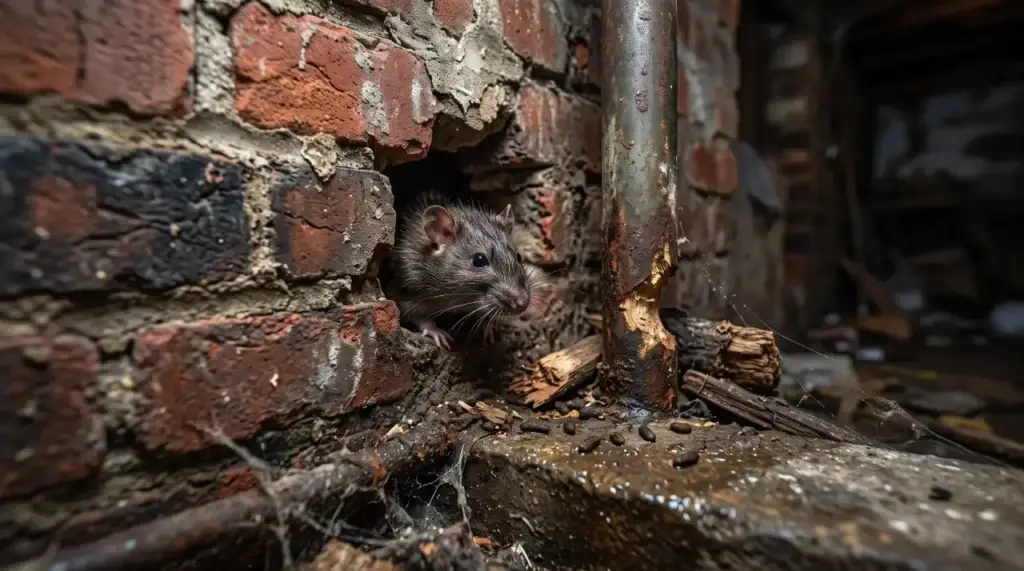
Utility chases, pipe penetrations, laundry rooms, and wall voids often run the full height of a building. Once a mouse or rat gets into the basement, those pathways let it travel to upper floors without ever crossing an open room. A mouse can squeeze through a gap about the size of a dime, and rats need only about a half-inch of space.
Trash Rooms and Dumpster Areas Supply Constant Food
Overflowing bins, damaged dumpster lids, and trash chutes with poor sanitation give rodents a reliable food source right at the building’s edge. Even a well-run building can attract rats if the surrounding properties aren’t as careful.
Older Buildings Have More Gaps
Many Hudson County buildings have aging foundations, worn door sweeps, cracked mortar, and utility lines that were never fully sealed. These small gaps add up quickly.
Why Fall Makes It Worse
As temperatures drop, rodents look for warmth, food, and shelter, and occupied buildings offer all three. This seasonal movement is the reason rodent calls climb every autumn. For a deeper look at the seasonal pattern, read our guide to Hudson County rodent control during fall migration.
Early Warning Signs Property Managers Should Watch For
Catching an infestation early keeps treatment simpler and tenant complaints lower. Train maintenance staff to report:
- Droppings along baseboards, in cabinets, or near trash rooms
- Gnaw marks on wiring, door frames, or food packaging
- Greasy rub marks along walls and pipes
- Scratching or scurrying sounds in walls, ceilings, or between floors
- Burrows near foundations, dumpsters, or landscaping
- Tenant reports of pet food or pantry items being chewed
If you’re seeing these signs, our guide to the signs of a rat infestation in Bayonne, NJ covers what to look for in more detail, and five things in your home that attract rodents can help you identify the conditions that invited them in.
Why Trapping Alone Won’t Solve a Building-Wide Problem
Setting traps in one unit can reduce the visible population, but it doesn’t address how rodents got in or how they’re moving between units. In a multi-unit property, a lasting solution has to combine three things:
- Inspection: Finding every entry point, harborage area, and food source across common areas and affected units
- Population control: Targeted trapping and monitoring to remove the rodents already inside
- Exclusion: Sealing the gaps and openings that let new rodents in
Sealing before trapping is finished can trap animals inside walls, which creates new problems. Our article on whether to seal rat holes before or after trapping explains the correct sequence, and our repairs and exclusions service handles the sealing step once the population is under control.
Building a Rodent Prevention Plan for Your Property
Prevention is far less expensive than repeated emergency treatments. A solid plan for a multi-unit property usually includes:
- Scheduled inspections of basements, trash areas, utility rooms, and exterior perimeters
- Sanitation standards for dumpsters and trash rooms, including lids that close and regular pickup
- Door sweep and gap maintenance on exterior doors, garage entries, and utility penetrations
- Landscaping upkeep to remove the dense ground cover and debris piles that shelter burrows
- Tenant communication that explains how to store food, dispose of trash, and report sightings promptly
Local Considerations Across Hudson County
Rodent pressure isn’t identical in every town. Hoboken and Jersey City have dense blocks of older multi-family housing with shared walls, while Bayonne mixes multi-unit buildings with waterfront properties, which can bring additional rat activity. A treatment plan should account for the specific building type, age, and surrounding conditions rather than using a one-size-fits-all approach. You can see the full range of communities we cover on our Hudson County service area page.
Work With a Licensed Rodent Control Team
Rodent control in a multi-unit property works best when one provider handles inspection, treatment, and exclusion as a single coordinated plan. At Clearview Pest Control, we design rodent programs around how your building actually works, from the basement to the roofline. See our rat and mice control programs for Hudson County for more on how we approach multi-unit properties. If you’re dealing with rodent activity in Hoboken, Jersey City, Bayonne, or nearby, contact us today to schedule an inspection.