Staten Island is the most suburban borough in New York City. It has the highest homeownership rate of the five, at just under 70 percent. It also holds more than 12,300 acres of protected parkland across 170 parks.
That combination changes what comes into your home. Detached houses with attics, crawl spaces and garages sit beside real woodland. The pests that follow are animals, not just insects.
We are eight miles away over the Bayonne Bridge and we cover the whole borough.
Why Staten Island Has a Wildlife Problem, Not a Roach Problem
Most of New York City is apartment buildings. Pests move sideways through shared walls. Staten Island does not work that way.
Here the pressure comes from the edges of the property:
- The Greenbelt and the park system. With 170 parks across the borough, most homes sit within a short walk of tree cover. Raccoons, squirrels, opossums and groundhogs live there and nest in your roof.
- Freshkills Park. The former landfill is being converted into parkland almost three times the size of Central Park. Reclaimed open ground is animal habitat.
- Detached houses with attics. A soffit gap on a two-storey house is an open door. Apartment dwellers do not have this problem. Homeowners do.
So we lead with wildlife here. The insect work matters, but it is not what most Staten Island calls are about.
Wildlife Removal in Staten Island
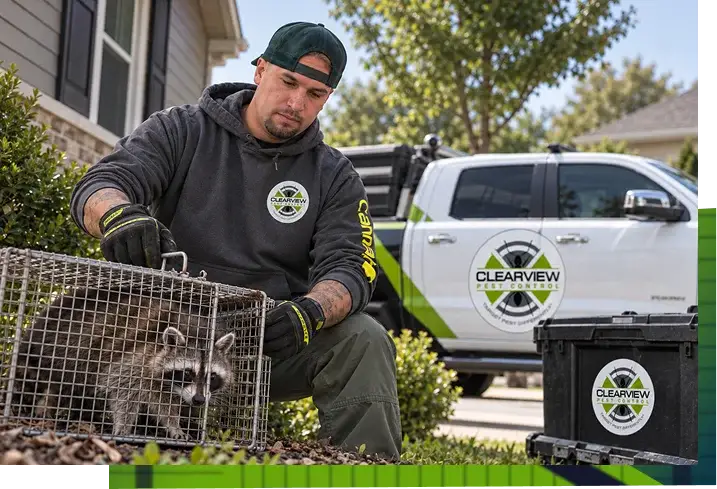
Raccoons, squirrels, skunks, opossums and groundhogs get into attics, chimneys, sheds, garages and the space under decks and porches.
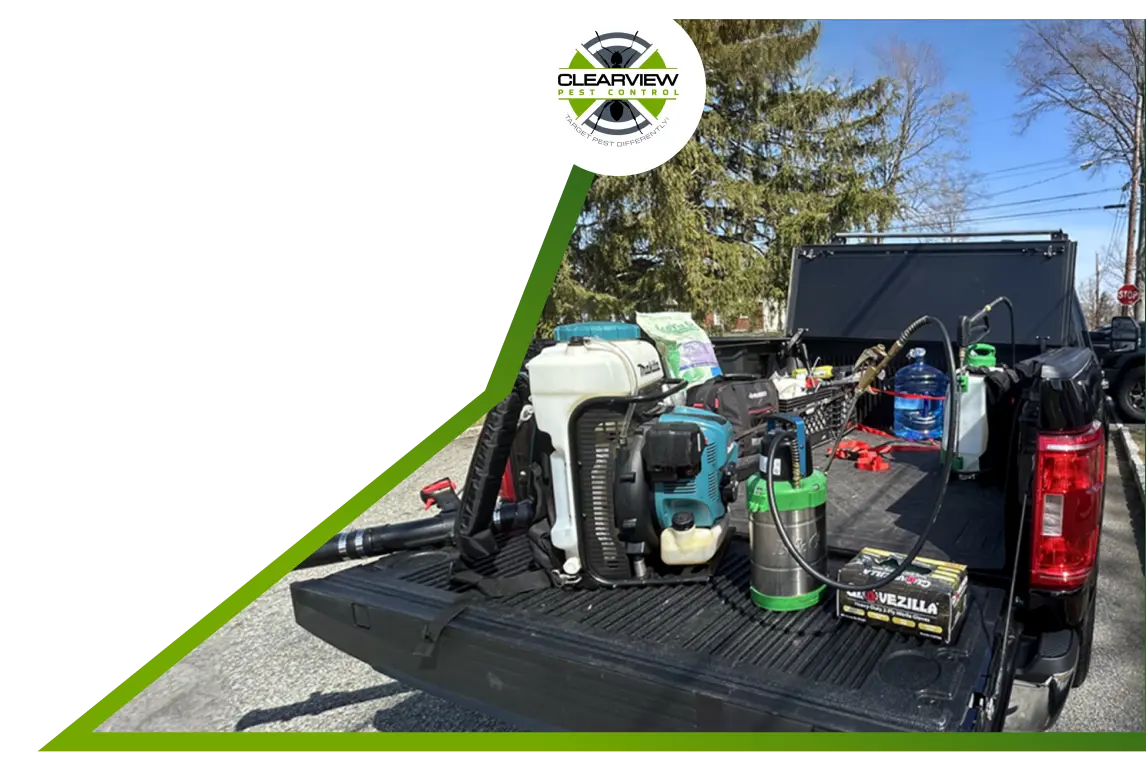
We inspect before we trap. Endoscope cameras go into wall cavities. Thermal imaging finds warm bodies behind plaster. Motion-detection cameras confirm how many animals are using an entry point and when.
That matters most in spring. Trap the mother alone and the young die in your wall. That turns a wildlife job into a dead animal job.
What we handle:
Removal is live and humane. We use traps, removal poles and nets, then re-check with cameras before closing anything up.
Once the space is confirmed empty we seal the entry point and repair the damage. Skipping that step just books you a second visit.
A full wildlife job runs five to seven days from first inspection to finished repair. Inspection and trapping start at $295. Exclusion work starts at $99. Attic cleanup is priced separately. Most jobs carry a one-year warranty.
Dead Animal Removal in Staten Island
An animal that dies inside a wall, chimney or crawl space starts to smell within a day or two. Flies follow within a week.
Our dead animal removal service locates the carcass, removes it, and treats the area so the odor and the flies stop.
This is the job we get called for after somebody else trapped an adult animal in spring and left the young behind.
Rodent and Rat Control in Staten Island
Rats and mice come in through garages, crawl spaces and gaps around utility lines. Detached homes give them more ground-level entry points than an apartment ever does.
Our rat and mouse control starts with an inspection, not with bait. We find and seal the entry points first, then trap.
Do it the other way around and you are just feeding a population that keeps being replaced. The CDC gives the same advice: seal the holes first.
We treat Norway rats, roof rats, house mice, field mice and deer mice. Traps are mechanical or humane depending on the situation. Rodent work starts at $145 with up to a six-month warranty.
Termite Control and Inspections in Staten Island
Subterranean termites work up from the soil into the frame. Detached houses on wooded lots give them more soil-to-wood contact than a city apartment block.
You rarely see the insects themselves. You see mud tubes on foundation walls, or paint that bubbles for no clear reason. The EPA lists mud tubes among the signs.
We treat eastern subterranean, drywood and dampwood termites using foaming treatments, liquid soil treatments and bait station systems. We do not fumigate.
Our termite treatment and inspections also cover home sales. Lenders often require a wood-destroying insect report before closing.
Bed Bug Treatment in Staten Island
Bed bugs arrive on luggage, second-hand furniture and clothing. They do not care how clean the house is.
Our bed bug treatment starts with an inspection of mattress seams, headboards, outlet plates and sofa frames. We find the source first, then treat.
The job runs in five steps: inspection, finding the source, showing you how bed bugs spread, treatment, then a second treatment with monitoring. Eggs hatch after the first visit, which is why the second one exists.
You get a preparation list before we arrive. Preparation decides whether the treatment holds, which is the point the EPA makes in its bed bug guidance. Bed bug work starts at $395 with a six-month warranty.
Cockroach Control in Staten Island
Roaches are less common in detached homes than in attached buildings, but they still turn up in kitchens, basements and around dishwashers.
Spraying alone scatters them. Our roach treatment uses gel bait and growth regulators, then a follow-up to break the breeding cycle.
Bees, Wasps and Hornets in Staten Island
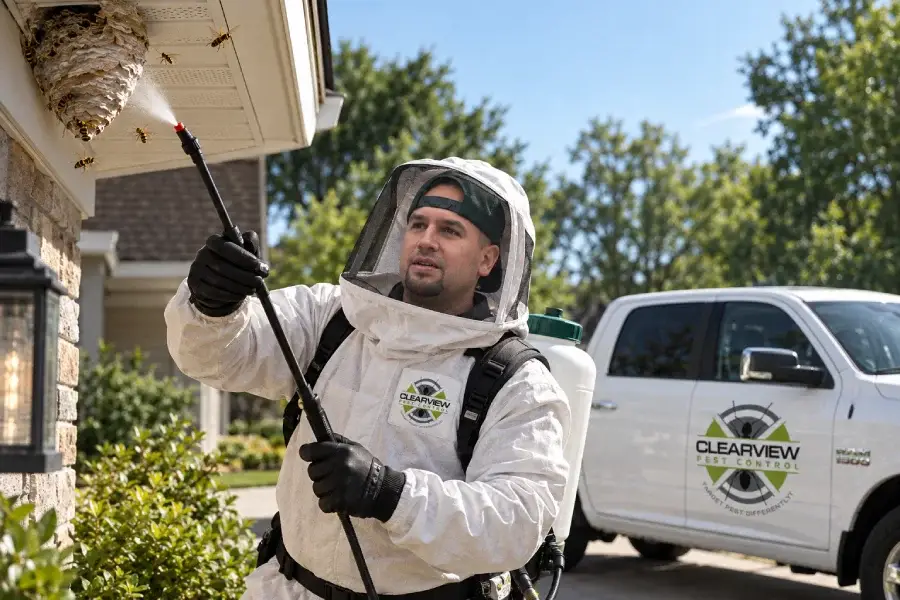
Wasps and hornets build under eaves, in soffits, behind shutters and inside unused grills. Yellow jackets nest in the ground, often right beside a lawn or walkway.
Call before you try anything yourself. Stinging insects turn defensive fast, and a ground nest is easy to step on without seeing it.
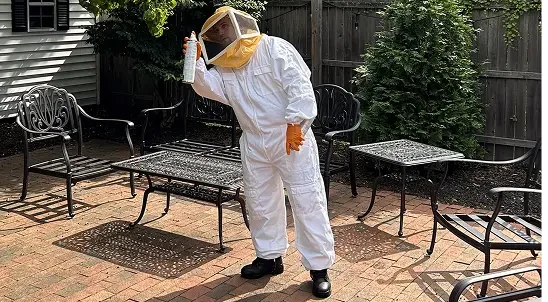
We locate the nest, remove it, treat the site, and back the work for 90 days with wasp and hornet nest removal. Honey bees are different — we offer honey bee relocation rather than killing the colony.
Mosquito Control in Staten Island
Yards, gardens and standing water are what make Staten Island pleasant and what make mosquitoes thrive. Gutters, tarps, plant saucers and low ground all hold enough water to breed them.
Our mosquito treatment covers the resting sites — shaded shrubs, fence lines, the underside of decks — and cuts down breeding sites on the property.
Treatment runs on a schedule through the warm months. One visit will not carry a season.
Ant Control in Staten Island
Ants come in for water and sugar, most often in spring and after heavy rain. Pavement ants and odorous house ants are the usual visitors.
Killing the ants you can see does nothing to the nest. Our ant control traces the trail back and treats the colony.
Carpenter ants are a different problem. They tunnel into damp wood and can weaken framing over time, which matters more in a wood-framed detached house.
Commercial Pest Control in Staten Island
Restaurants, retail units, offices and apartment buildings each carry different risks and different inspection requirements.
We build the schedule around your opening hours and give you the documentation health inspectors and property managers ask for. Our approach to commercial pest control is built around prevention between visits.
How a Staten Island Service Call Works
- Call or request a quote. Tell us what you have seen, where, and when you hear it.
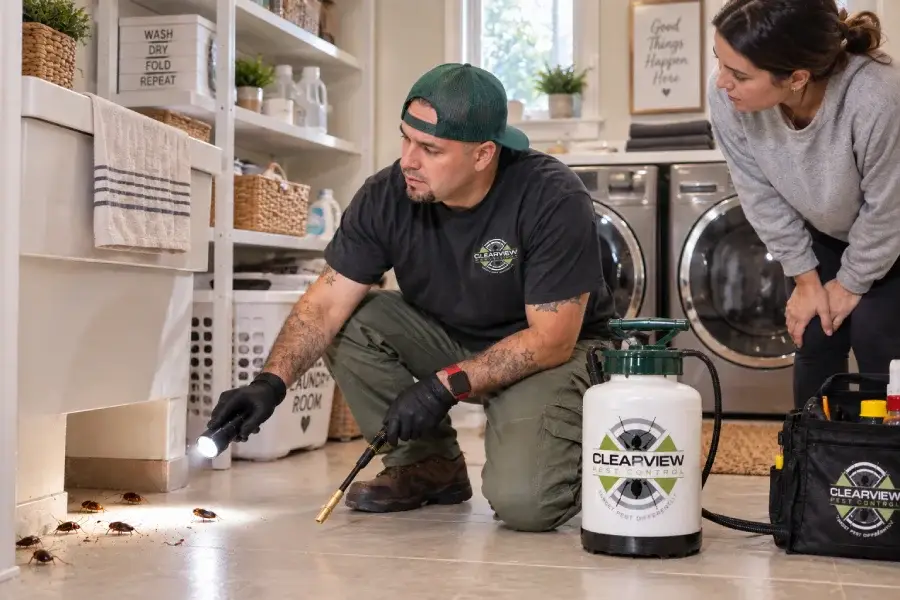
- Inspection. For wildlife we bring cameras. For insects we check the harborage sites, not just the room you noticed them in.
- Treatment plan. You get the plan, the price and the preparation steps before we start.
- Follow-up. Most jobs need a second visit. Wildlife jobs finish with repair work. We book it before we leave.
Areas We Cover in Staten Island
We work the whole borough, all of Richmond County:
- North Shore — St. George, Tompkinsville, Stapleton, Clifton, Port Richmond
- East Shore — South Beach, Old Town, Dongan Hills, New Dorp
- Mid-Island — Willowbrook and the Greenbelt edge
- South Shore — Arden Heights, Rossville, Tottenville
We are based across the Bayonne Bridge and also work in Bayonne, Jersey City and Newark.
Frequently Asked Questions
How much does raccoon or squirrel removal cost in Staten Island?
Inspection and trapping start at $295, and exclusion work starts at $99. The final price depends on how many animals are inside, how much damage they have done and whether cleanup is needed. You get the number before we start, not after.
How long does a wildlife removal job take?
About five to seven days on average. That covers the inspection, the removal, the repair to the entry point and the final camera check. A single-animal job with an easy entry point can be faster.
Will you break my walls open?
Usually not. We inspect with endoscope and thermal cameras first, which is how we avoid opening walls we do not need to open. In most cases we can reach the animal and the entry point from outside.
Do raccoons and squirrels carry disease?
Yes. Wild animals can carry rabies and other diseases, passed mainly through urine, droppings and body fluids. The longer an animal has lived in the space, the higher the risk. That is why cleanup and sanitation matter as much as removal.
Are your treatments safe around children and pets?
Yes. Our treatments are pet-friendly and we work with eco-friendly and organic products, including Ecovia and Delta Dust. We tell you which rooms to stay out of and for how long. Most products need a short drying period, not a full day out of the house.
Do you have a guarantee?
Yes. Most wildlife jobs carry a one-year warranty. Rodent and bed bug work carry up to six months, and stinging insect work carries 90 days. The exact term depends on the job and is written down before we start.
Why do I have squirrels every single year?
Because the entry point was never closed. Trapping removes the animal in your attic today. If the soffit gap or roof vent stays open, the next squirrel finds it within a season. Exclusion is the part that ends the cycle.
What parts of Staten Island do you cover?
All of it. We work the whole borough from St. George and Port Richmond on the North Shore to Tottenville on the South Shore, including the Greenbelt edge and the East Shore neighborhoods.
Contact Us
Clearview Pest Control & Exterminator Services
Serving all of Staten Island, NY
Phone: (201) 706-7437
Hours: Open 24 hours