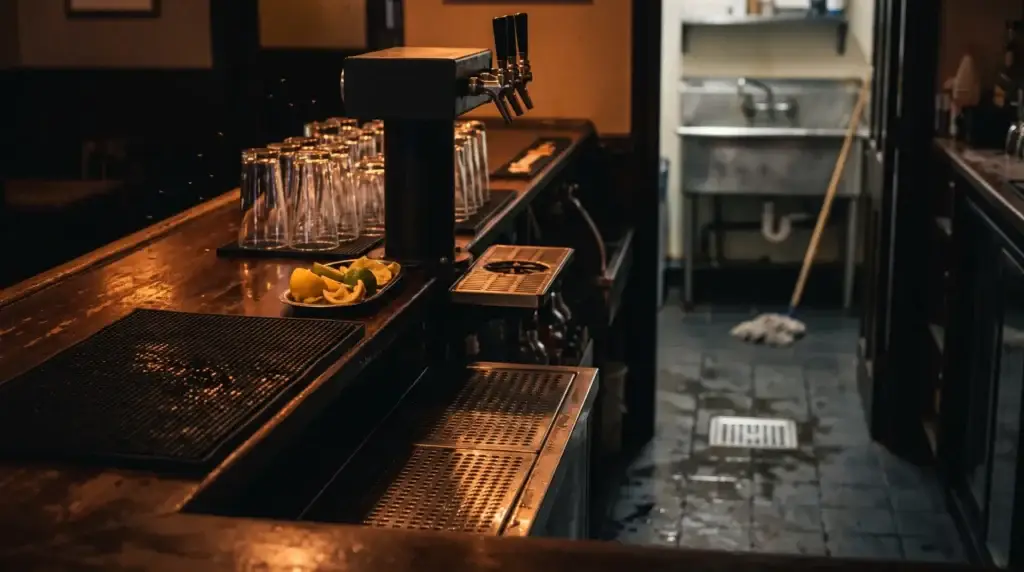

Busy dining and nightlife corridors like Hoboken’s Washington Street put constant pressure on a bar’s or restaurant’s pest defenses. Small flies are one of the hardest problems to keep ahead of, because the places they breed (drains, spills, bar mats, and trash) are part of daily operations. Fall doesn’t slow things down either. Indoor temperatures stay warm and steady, so flies keep breeding well after the weather outside turns cold.
This guide explains where drain flies and fruit flies come from in commercial bars and restaurants, which sanitation habits matter most, and when to bring in a professional.
Drain Flies vs. Fruit Flies
The two look similar to customers but breed in different places, so telling them apart matters.
Fruit Flies
Fruit flies are small, tan flies drawn to fermenting sugars, such as spilled drinks, garnishes, overripe produce, and unrinsed bottles and cans. A bar environment offers plenty of these sources. Our article on the fruit fly life cycle explains why a small number of flies can quickly become a large one.
Drain Flies
Drain flies are fuzzy, moth-like flies that breed in the slimy organic film inside drains, grease traps, and damp areas. Seeing them near floor drains, mop sinks, or ice machine drains is a sign of buildup you can’t see.
Where They Breed in Bars and Restaurants
Most infestations trace back to a handful of spots:
- Floor drains and drain lines behind the bar and in the kitchen
- Bar mats, drip trays, and beverage taps with residue
- Mop sinks and mop buckets that stay wet
- Ice machine and soda gun drains
- Trash cans, recycling bins, and glass or can storage
- Cracks in tile or flooring where liquids collect
Why Spraying Alone Doesn’t Work
Insecticides can knock down adult flies, but they don’t remove the buildup where larvae develop. Unless the breeding source is cleaned out, new flies keep emerging. This is why an integrated approach works best. We explain the concept in our overview of why integrated pest management matters for businesses.
Sanitation Practices That Stop Small Flies
A consistent routine does more than any one-time treatment:
- Clean drains regularly with a brush and an enzyme-based cleaner designed to break down organic buildup
- Pull and wash bar mats and drip trays daily
- Rinse bottles and cans before recycling and empty bins before they overflow
- Wipe spills right away and clean around taps and soda guns
- Keep mop sinks dry and rinse mop heads, then let them dry
- Seal or screen floor drains that aren’t in use
Our guide to pest prevention in food handling facilities covers these habits and others in more detail.
Fall-Specific Considerations
Fall can add new sources for flies. Seasonal produce, ciders, and decorative gourds can all attract fruit flies, and heavier holiday and event traffic means more spills and more trash. Doors propped open for ventilation also give flies an easy way in. Reviewing your cleaning schedule before the busy season helps prevent a problem rather than reacting to one.
How Often Should You Schedule Commercial Service?
Most food and beverage businesses are better served by recurring service than one-time visits, since pest pressure doesn’t stop. Frequency depends on the operation and the building. Our guide on how often a restaurant needs pest control and our overview of commercial pest control strategies in NJ can help you plan. If you’re comparing providers, see what affects pest control costs in New York and New Jersey.
Serving Hoboken, Jersey City, and Hudson County
Shared walls, shared dumpsters, and dense foot traffic mean a fly problem next door can become your problem. We work with bars and restaurants in Hoboken, Jersey City, and across Hudson County. Our team can inspect for breeding sources, recommend sanitation changes, and set up ongoing monitoring.
Keep Flies Out of Your Dining Room
Flies in a dining room hurt reviews and can raise health inspection concerns. If you’re dealing with drain flies or fruit flies, or want a plan before the holiday rush, contact Clearview Pest Control to schedule an inspection.