
For a restaurant, a pest sighting is more than an operational problem. One cockroach in the dining room or a rodent in the kitchen can trigger a failed health inspection, a bad online review, or a temporary closure. In busy food corridors across Jersey City, Newark, and the surrounding area, restaurants face constant pest pressure from neighboring buildings, aging infrastructure, and high foot traffic.
Integrated Pest Management (IPM) is the standard approach to keeping commercial kitchens protected. This guide explains how IPM works for restaurants, the sanitation standards that make it effective, and what to expect when evaluating commercial pest control services and pricing.
What Is Integrated Pest Management?
IPM is a structured, ongoing approach to pest control that prioritizes prevention and monitoring over reactive spraying. For a deeper background, see our article on why integrated pest management is important for businesses. In a restaurant setting, an IPM program usually includes:
- Inspection: A thorough review of the kitchen, storage, dining area, restrooms, and exterior
- Identification: Determining which pests are present and why
- Prevention: Sealing entry points, improving sanitation, and eliminating food and water sources
- Targeted treatment: Using the least disruptive effective method for the specific problem
- Monitoring and documentation: Tracking activity over time and keeping service records
Why Restaurants Are So Vulnerable
Restaurants provide everything pests need: food, water, warmth, and shelter. The most common problems in commercial kitchens include:
- Cockroaches, which thrive around dishwashing stations, floor drains, and warm equipment
- Rats and mice, drawn to dry storage, dumpsters, and gaps around doors and utility lines
- Flies, including fruit flies and drain flies, linked to moisture and organic buildup
- Stored product pests, which infest flour, grains, and dry goods
Our guide on pest prevention in food handling facilities covers the core practices in more detail.
Sanitation Standards That Make IPM Work
No pest control program can succeed if sanitation is inconsistent. Treatment removes the pests, but sanitation keeps them from coming back.
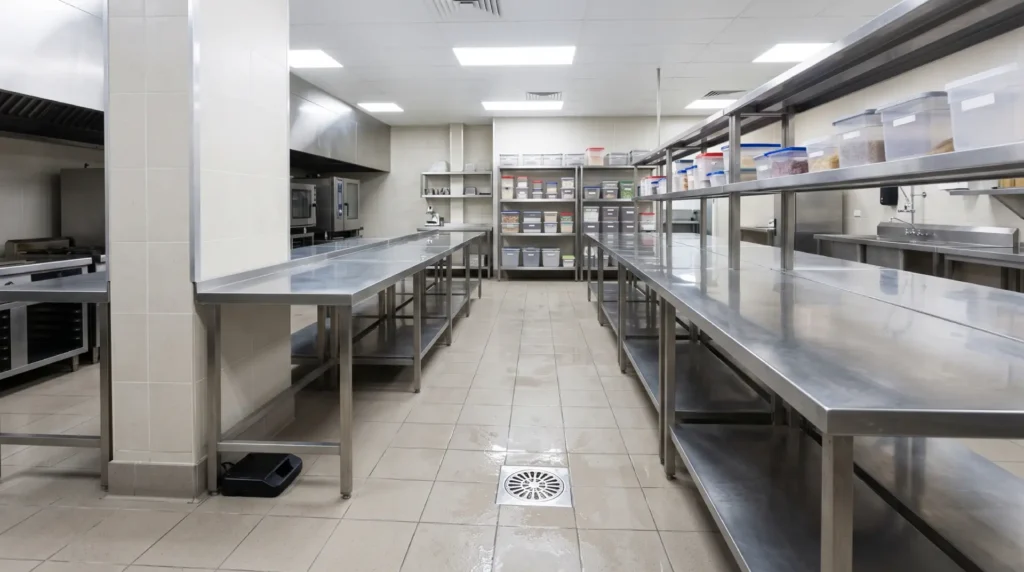
Daily Kitchen Practices
- Clean food debris from floors, under equipment, and around drains at closing
- Wipe down prep surfaces, shelving, and equipment nightly
- Store food in sealed, labeled containers off the floor
- Empty trash before it overflows and keep lids closed
Receiving and Storage
- Inspect deliveries for signs of pests before bringing boxes inside
- Break down cardboard promptly, since it shelters cockroaches
- Rotate stock to avoid forgotten, expired items
Exterior and Waste Management
- Keep dumpsters clean, covered, and away from entry doors where possible
- Seal gaps around doors, pipes, and vents
- Use door sweeps and keep back doors closed when not actively in use
How Often Does a Restaurant Need Pest Control?
Most commercial kitchens benefit from a recurring service schedule rather than one-off treatments, since pest pressure is constant. The right frequency depends on the type of operation, building age, and neighboring businesses. Our guide on how often a restaurant needs a roach exterminator and our overview of commercial pest control strategies in NJ both walk through how to think about service frequency.
What Affects Commercial Pest Control Pricing?
Restaurant owners often search for “pest control pricing near me” and find it hard to get a clear answer, because commercial pricing depends on the property rather than a flat rate. Common factors include:
- Size of the establishment, including the kitchen, dining area, and storage
- Type and severity of the pest problem
- Service frequency, such as monthly versus quarterly
- Building age and condition, especially entry points and structural gaps
- Location and surrounding properties, since shared walls and neighboring food businesses increase pressure
- Documentation and compliance needs, like service logs for inspections
We explain the broader factors in what affects pest control costs in New York and New Jersey and how we approach quoting in our post on transparent pest control pricing.
Essex and Hudson County Restaurant Corridors
Dense restaurant districts create unique challenges. Shared walls, shared dumpsters, and older buildings mean one property’s problem can quickly become its neighbors’ problem. Restaurants in Jersey City and across Hudson County deal with high-density blocks and heavy foot traffic, while operators in Newark and throughout Essex County often manage older buildings with shared infrastructure. Just west of Essex County, restaurants in Paterson, which sits in Passaic County, face similar conditions, and we cover that area too.
For the two most common restaurant pests, you can see how our roach control and rat and mice control services work.
Choosing a Commercial Pest Control Partner
When evaluating providers, look for a team that:
- Starts with a full inspection rather than a flat treatment
- Offers a recurring IPM program, not just reactive visits
- Provides written service records you can share with inspectors
- Communicates clearly about what you need to do on the sanitation side
- Responds quickly when something comes up between scheduled visits
Protect Your Restaurant’s Reputation
A proactive pest program costs far less than a closure, a failed inspection, or the loss of customer trust. If you run a restaurant or food business in Hudson or Essex County, contact Clearview Pest Control to schedule an inspection and talk through a program built around your kitchen.