

Termites cause billions of dollars in property damage across the United States each year, and Northern New Jersey’s older housing stock is especially exposed. Brownstones in Bayonne and Hudson County, early 20th century homes in Paterson and Passaic County, and established neighborhoods in Bergen County often combine aging wood framing, stone or brick foundations, and decades of soil contact, which is the exact environment subterranean termites exploit.
The challenge is that termite damage is mostly hidden. By the time it’s visible, it may have been progressing for years. Here’s how to recognize the warning signs early and what to do about them.
Why Older Homes and Brownstones Are Prime Targets
Subterranean termites live in underground colonies and travel to wood through soil. Older structures tend to offer them several advantages:
- Foundation cracks and gaps that give termites hidden access from soil to framing
- Wood in contact with soil, such as porch posts, door frames, and basement beams
- Moisture problems, since damp wood is easier for termites to consume
- Past repairs and additions that created gaps between old and new construction
- Long periods without inspection, allowing small colonies to grow undetected
Brownstones add a unique wrinkle. Their shared walls and masonry shells can hide wood joists, beams, and subfloor framing that stay in contact with damp foundation walls for decades.
Warning Signs of Subterranean Termites
If you own or manage an older property, watch for these signs.
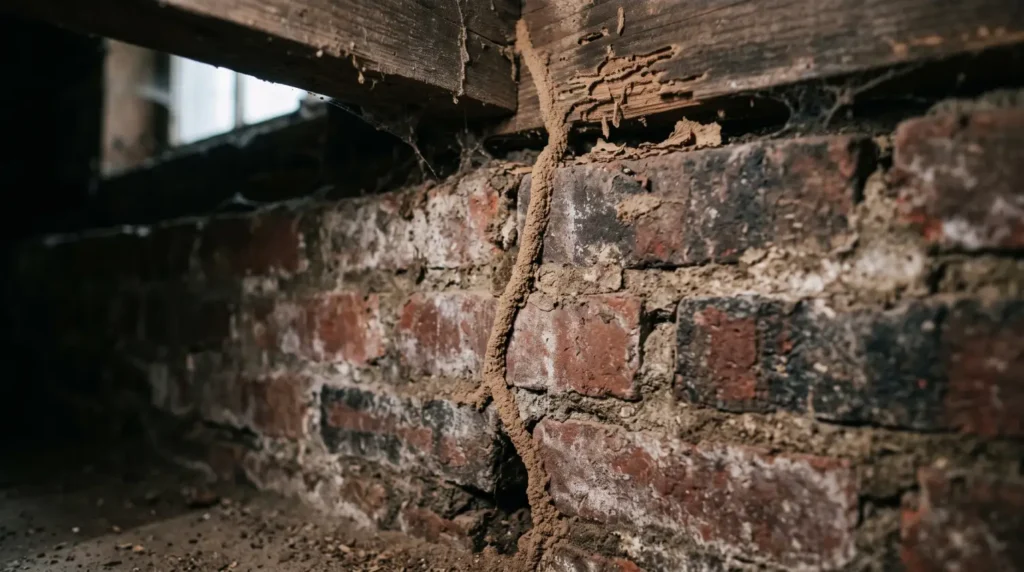
Mud Tubes
Subterranean termites build pencil-width tubes of soil and saliva along foundation walls, piers, and crawl space surfaces to protect themselves as they travel. Mud tubes are one of the most reliable indicators of activity.
Swarmers and Discarded Wings
Winged termites emerge to start new colonies. Finding swarmers indoors, or piles of translucent wings near windowsills and doors, is a strong sign of an established colony nearby. Many homeowners confuse them with flying ants, a distinction we cover in termites vs. carpenter ants in Bayonne.
Hollow-Sounding or Damaged Wood
Termites eat wood from the inside out, leaving a thin outer layer intact. Tapping on baseboards, door frames, or beams and hearing a hollow sound, or noticing wood that gives way under light pressure, suggests internal damage.
Buckling Floors, Sagging Surfaces, and Sticking Doors
Moisture and structural changes from termite activity can cause warped flooring, sagging ceilings, and doors or windows that suddenly stick.
Bubbling or Peeling Paint
Paint that bubbles or peels without an obvious moisture source can sometimes point to termites working beneath the surface.
For a more complete checklist, see our guide on how to know if you have a termite problem.
Conditions That Make Termite Problems Worse
Even a well-maintained older home can have conditions that invite termites. Common culprits include:
- Mulch, soil, or landscaping piled against the foundation
- Leaky gutters, downspouts, or plumbing that keep soil near the foundation damp
- Firewood or lumber stored directly against the house
- Crawl spaces and basements with poor ventilation and high humidity
Our article on termite attractants in your home goes deeper on how to identify and reduce these risks.
How Often Should You Get a Termite Inspection?
Older homes, especially those with a history of moisture problems or past termite activity, benefit from regular professional inspections rather than waiting for visible signs. Our guide to how often you should get a termite inspection in Bayonne explains the general recommendation and what affects it. If you’re buying or selling an older property, you may also need a wood-destroying insect inspection, which we break down in when you should get a WDI inspection.
What a Professional Termite Response Looks Like
DIY termite products rarely reach the underground colony, which is where the real problem lives. A professional approach typically includes:
- A detailed inspection of the foundation, crawl space, basement, and accessible framing
- Identification of the termite species and the extent of activity
- A treatment plan matched to the structure and the infestation
- Recommendations to correct the moisture and wood-to-soil conditions that attracted termites
- Follow-up monitoring to confirm the problem is resolved
You can learn more about our approach on our termite control service page.
Termite Control Across Northern New Jersey
Termite pressure shows up differently depending on where you live. Older brownstones and row homes in Bayonne and across Hudson County often involve shared walls and masonry foundations. In Paterson and Passaic County, older wood-frame housing and multi-family buildings are common. Homeowners in Englewood, Englewood Cliffs, and across Bergen County often deal with established homes with finished basements and long histories of moisture exposure.
Schedule a Termite Inspection Before Damage Spreads
Termites don’t take the winter off inside a heated home, and early detection almost always means simpler treatment and lower repair costs. If you’ve noticed any of the warning signs above, or your older home has never had a termite inspection, contact Clearview Pest Control to schedule one.