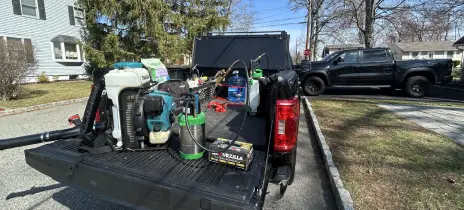
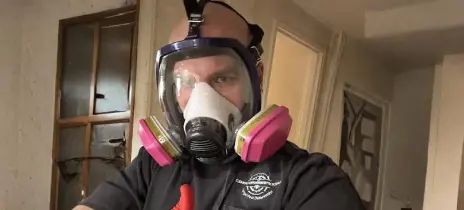
Englewood Cliffs is an unusual borough to service. Around 5,300 residents on large wooded lots, a third of the municipality under water or parkland, Palisades Interstate Park running straight through it — and, in the middle of all that, the North American headquarters of LG, Unilever and CNBC. It is simultaneously one of the quietest residential settings in Bergen County and a serious commercial campus. Those two halves need different pest programs, and Clearview runs both.
Call (201) 932-2487.
Why spiders are the number one call here
More people in Englewood Cliffs search for spider control than for anything else, and the reason is structural rather than seasonal. Spiders are a symptom of two things: available insect prey, and undisturbed places to build. This borough supplies both in unusual quantity.
- Woodland on the boundary. Properties back onto Palisades Interstate Park and the cliff face, which is continuous mature habitat rather than landscaped ground.
- Large houses with a lot of exterior corners. Soffit returns, porticos, portico columns, window recesses, garage bays, pool houses and detached garages. Every sheltered corner is a web site.
- Exterior lighting. This is the one most people miss. Landscape and security lighting on a large property draws flying insects all night, and spiders build where the food is. A house lit for security is a house catering for spiders.
- Low disturbance. Low density and large lots mean webs on an upper cornice or in a rarely used garage bay can persist for months.
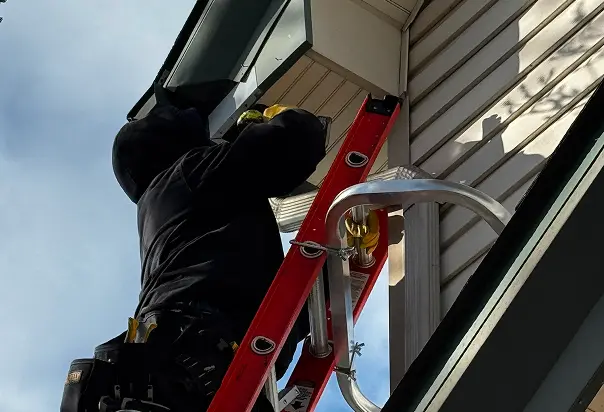
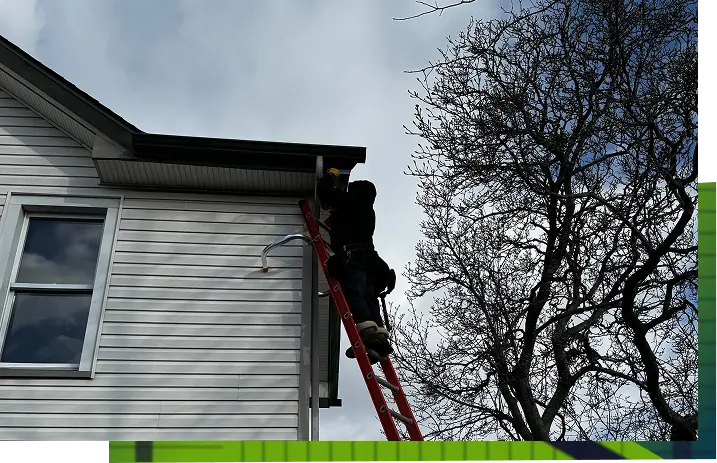
Treatment is therefore mostly exterior and mostly mechanical: web removal and de-webbing at eaves, soffits, porticos and light fixtures, a residual applied to those harborage surfaces, and then the lighting conversation — switching to warmer color-temperature bulbs, moving fixtures away from doorways, and putting decorative lighting on timers reduces the insect draw that feeds the whole cycle.
Most spiders here are harmless nuisance species building webs. Rutgers publishes non-commercial identification guidance through its Pest Management Office if you want to confirm what you are looking at before calling anyone.
Corporate campuses need a different program entirely
LG’s North American headquarters alone is a 352,000-square-foot building, opened in 2018. Add Unilever and CNBC and this small borough carries a concentration of corporate square footage that most towns its size never see. Those sites need commercial programs, not residential visits:
- Cafeteria and food service areas — the highest-risk zone on any corporate campus, treated on the same footing as a restaurant.
- Loading docks and refuse compounds — dock door seals and sweeps are the highest-value structural fix on any commercial building.
- Atriums and interior planting — irrigated soil indoors breeds fungus gnats and supports ants, and it is almost always overlooked.
- Extensive landscaped grounds — the perimeter is where rodent and stinging insect pressure originates on a campus site.
- Documented service — numbered device maps, service logs kept on site, trend reporting, and corrective actions written down. Audits and facilities reviews want records, not recollection.
Scheduling matters as much as the treatment. Campus work runs before opening, after close, or around a facilities calendar, and never through a working cafeteria.
What the large residential lots actually get
Beyond spiders, the residential pattern here is set by lot size and the park boundary rather than by housing age:
Ants. The second most searched pest in the borough. Pavement ants in the extensive hardscape these properties carry — driveways, walkways, patios, pool surrounds — and carpenter ants where mature canopy keeps siding and trim damp.
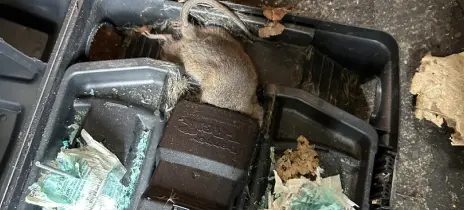
Rodents entering from the woodland edge. Not the urban rat story. White-footed and house mice moving in from the park boundary as nights cool, entering low through garage door sweeps, crawl space vents and utility penetrations. On a property with outbuildings, a pool house or a detached garage, those structures are usually where it starts.
Lawn and turf pests. Large maintained lawns bring grub damage, and grub activity in turn draws skunks and other diggers that tear up sod hunting them. Treating the turf problem often resolves the wildlife complaint that came with it.
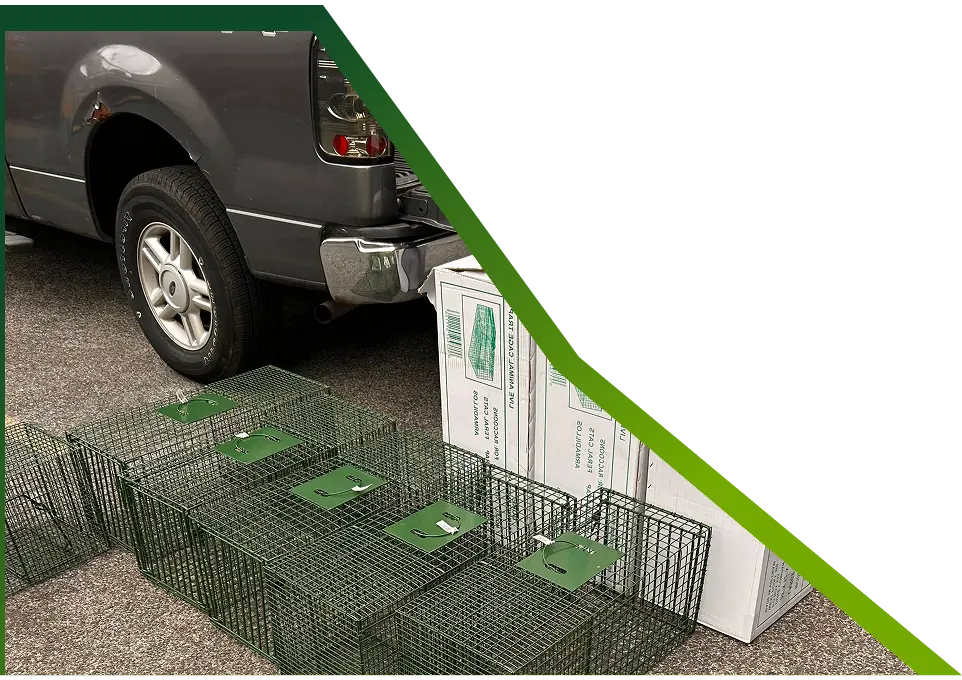
Wildlife off the Palisades. The park is a continuous corridor along the cliff. Raccoons, squirrels, groundhogs, skunks and opossums are resident rather than passing through, and on large properties they den under decks, pool equipment pads and sheds far more often than in the house itself. New Jersey regulates how nuisance wildlife is handled — see NJ Fish & Wildlife. Exclusion around outbuildings, trenched below grade, ends more of these than trapping does.
Mosquitoes on a cliff-top property
Sitting 318 feet up does nothing to stop mosquitoes, because the breeding sites are on your own land. On these properties the usual culprits are pool covers and equipment pads, ornamental water, irrigation boxes, gutters under heavy canopy, and the low points of long driveway drains.
Bergen County will inspect a property on request through its mosquito inspection request, which is free and worth doing. It does not extend to a season-long program on a private acre, which is where a scheduled barrier and larvicide program comes in.
Frequently asked questions about pest control in Englewood Cliffs
Webs keep coming back within weeks. Why?
Because the food supply has not changed. De-webbing and a residual clear what is there, but exterior lighting keeps drawing insects and new spiders keep arriving. Changing bulb color temperature and moving fixtures away from entrances does more for a recurring web problem than any additional spraying.
Are the spiders here dangerous?
Overwhelmingly no — the species building webs on eaves and in garages are nuisance spiders. If you find something you are unsure about, photograph it rather than handling it and we will identify it for you.
Do you service corporate campuses and office buildings?
Yes. Cafeterias, loading docks, atriums, grounds and refuse areas, on a scheduled program with device maps and service logs kept on site. We work around your facilities calendar rather than through it.
Something is digging up my lawn overnight.
That is usually skunks or raccoons hunting grubs, which means you have two problems and one of them is in the turf. Treating the grubs removes the reason they keep returning; excluding them from under sheds and decks handles the rest.
My property backs onto the Palisades park. Can anything actually keep wildlife out?
You cannot change the corridor, but you can stop being the easiest structure on it. Trenched mesh around sheds, pool houses and deck perimeters, sealed crawl space vents and a clear strip between woodland and foundation do most of the work.
Do you cover the whole borough and the towns nearby?
Book an inspection in Englewood Cliffs
Call (201) 932-2487. Tell us whether it is a home, a campus building or grounds — the three are scoped and scheduled very differently.