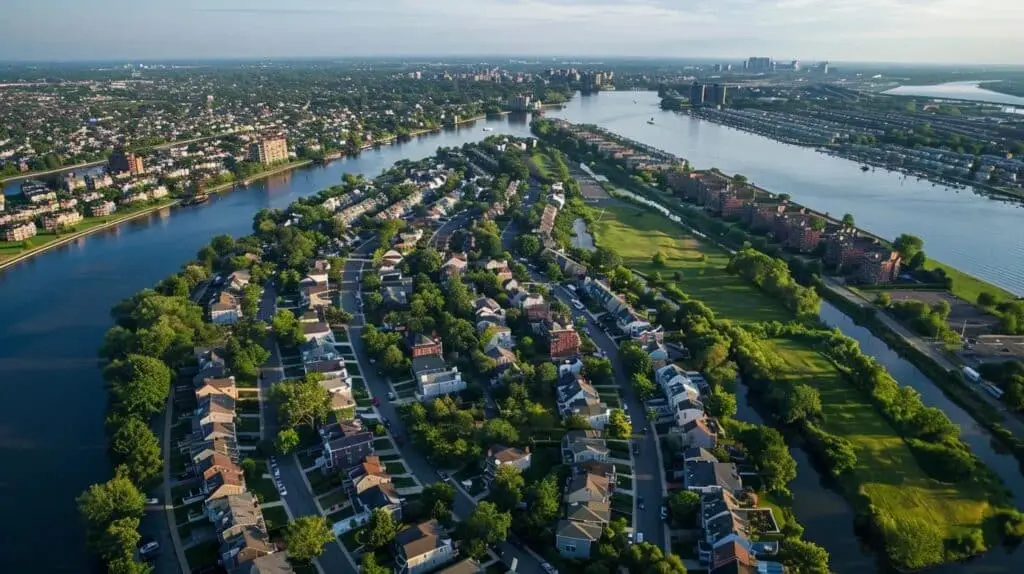

Hudson County is one of the most built-up places in the country, and it still has a lot of wildlife. Raccoons, squirrels and opossums live along the waterfront, in Liberty State Park and Lincoln Park, behind rail lines and in the big trees over older neighborhoods in Jersey City, Bayonne and Hoboken. When the weather turns, they look for shelter, and attics, wall voids and the space under porches are the easiest options around.
Here are the five signs that tell you an animal has moved in, what each one usually means, and what to do about it.
Sign 1: Noises in the Attic, Walls or Ceiling
Sound is usually the first clue, and the timing tells you a lot about what you’re dealing with:
- Early morning and dusk, light and quick, sometimes rolling or scratching: usually squirrels. They’re active in daylight and leave to forage during the day.
- Late at night, heavy thumping, walking or chattering: usually raccoons. They’re big, and you’ll hear them clearly through the ceiling.
- Night, quieter shuffling under a porch, deck or crawl space: often opossums.
- Night, scratching inside walls at floor level: more likely rats or mice than wildlife. Our guide to signs of a rat infestation covers what to look for.
High-pitched chirping or crying in spring often means babies. That changes the whole removal plan, so don’t try to block the entry or evict the animal yourself.
Sign 2: Damage and Entry Holes
Animals have to get in somewhere, and the damage they leave tells you what’s inside:
| Damage | Likely animal |
|---|---|
| Torn shingles, ripped soffits, bent vent covers, a large opening | Raccoon |
| Small round chewed holes along the roofline, gnawed fascia or trim | Squirrel |
| Uncapped chimney with debris or scratching inside | Raccoon (sometimes squirrels or birds) |
| Dug-out spaces under porches, decks, stoops and sheds | Opossum, raccoon or skunk |
| Chewed wiring or insulation in the attic | Squirrel or rodents |
Walk around the house and look up at the roofline, around vents and where the roof meets the walls. In Hudson County’s attached homes and rowhouses, check the shared roofline too. An opening on the neighbor’s side can lead into your attic.
Sign 3: Droppings, Urine Stains and Nesting Material
Wildlife droppings in an attic or crawl space are a strong sign, and each animal leaves something different:
- Raccoons use one spot as a latrine, so you’ll find a pile of large droppings in one place.
- Squirrels leave small, rounded, scattered droppings. See what squirrel poop looks like for a side-by-side comparison with rat droppings.
- Opossums leave larger droppings near where they den, often under decks or in crawl spaces.
Also look for stained or flattened insulation, shredded paper, leaves and fabric pulled into a corner, and brown water-like stains on the ceiling below. Don’t clean up wildlife droppings without gloves and a mask. Raccoon droppings in particular can carry raccoon roundworm eggs.
Sign 4: Strange Odors
A strong ammonia smell from the attic usually means urine buildup from an animal that’s been there a while. A sweet, rotten smell that gets worse over a few days usually means something has died in the walls, attic or under the house. That often happens when an animal gets trapped by a DIY repair or has been poisoned. A dead animal needs to be found and removed, not covered up; see our dead animal removal service.
Sign 5: Seeing the Animal Around the House
Seeing a raccoon on the roof, a squirrel going in and out of the soffit, or an opossum under the deck at dusk isn’t just a passing visit. Wildlife that keeps returning to the same spot is living there or about to. Watch for:
- The same animal at the same time each day
- Animals going onto the roof by way of a tree, fence or gutter downspout
- Raccoons tipping trash cans night after night
- Several young animals with an adult, which means a den nearby
Winter Wildlife in Bayonne Homes
Bayonne gets a second wave of wildlife calls once real cold arrives. Raccoons don’t fully hibernate, but they hole up during cold stretches, and attics give them the warmth they need. Squirrels stay active all winter and use attics as winter nests. Opossums look for any sheltered space under porches, sheds and stoops.
The holiday season adds a few Bayonne-specific triggers:
- Attic and garage trips to get decorations often turn up nests, droppings or chewed wiring that went unnoticed all fall.
- Holiday food waste in trash cans draws raccoons to yards and alleys.
- Heat loss through damaged roofs and soffits makes those openings even more attractive on cold nights.
Raccoons start their mating season in late winter, so a raccoon living in your attic in January can mean a litter of babies there by spring. That’s a much harder job than removing one animal in December. If you’re getting your home ready for the season, our fall pest prevention checklist covers the roofline and foundation checks that keep wildlife out. For service details, see wildlife removal in Bayonne.
What to Do When You Spot the Signs
Don’t block the entry hole until you know the animal is out. Sealing it in means a new hole, often into the house, or a dead animal in the walls.
Don’t try to trap it yourself. Raccoons and opossums can bite, raccoons can carry rabies, and New Jersey regulates trapping and relocating wildlife.
Don’t use poison or smoke. Both can kill the animal inside your house.
Do call for an inspection. Here’s how our wildlife removal works:
- Inspection for babies, entry points and damage
- Camera checks with endoscope, thermal and motion cameras to find where the animals are
- Humane removal with live traps, plus catch poles and nets where needed
- Confirming the space is clear before anything is sealed
- Exclusion, repairs and cleanup
Wildlife inspection and trapping starts at $295, exclusion work starts at $99, most jobs take 5 to 7 days, and most come with a one-year warranty. For raccoons specifically, our guide to raccoons in the attic goes step by step. If the problem is a burrow in the yard, see groundhogs in New Jersey.
See our service pages for raccoon control, squirrel removal and opossum control.
Wildlife Removal FAQ
What animals get into Hudson County attics most often?
Squirrels and raccoons, by far. Opossums tend to den under porches, decks and sheds rather than in attics.
Will the animal leave on its own?
Sometimes, but it often returns, especially in fall and winter when it’s using your attic as a den, or in spring when it has young.
How long does wildlife removal take?
Most jobs take 5 to 7 days, depending on the animal’s movements and confirming the space is clear before sealing.
Can wildlife damage my house?
Yes. Raccoons tear open roofs and soffits, squirrels chew wiring and wood, and droppings and urine soak insulation. Damage builds the longer they stay.
Are wildlife droppings dangerous?
They can be. Raccoon droppings can carry raccoon roundworm, and droppings and urine can carry other diseases. Don’t clean them up without protection.
Hearing something in the attic or walls? Call 201-932-2264 to book a wildlife inspection in Hudson County.