Safe raccoon removal requires humane one-way exclusion devices installed near roof edges and damaged soffits, letting animals exit without re-entry, followed by sealing once the attic sits empty. Clearview Pest Control, based in Bayonne, NJ, applies integrated pest management for homeowners and property managers across Northern New Jersey and New York City, addressing scratching noises, disturbed insulation, and vulnerable entry points before restoring the attic to a secure, pest-free condition.
Key Takeaways
- Listen for scratching and thumping noises at night—key indicators of raccoon activity in your attic.
- Make attics less appealing by removing food sources and securing entry points to encourage raccoons to leave.
- Clearview Pest Control’s 24/7 availability ensures licensed professionals handle stubborn infestations when DIY methods fail.
- Contact our locally owned Bayonne, NJ team for humane, safe removal without traps or harm to animals.
What Do You Need Before Attic Raccoon Removal?
Preparation determines whether attic raccoon removal goes smoothly or turns into a repeat problem. Confirming a few essentials before any work begins protects both the household and the animal involved.
How can homeowners tell raccoons are in the attic?
Scratching or thumping sounds at night rank among the clearest warning signs. Heavy footsteps overhead, disturbed insulation, and droppings near entry points also point to an active raccoon presence. Noticing these signs early allows for faster, safer action.
Before scheduling raccoon attic removal, homeowners and property managers should confirm the following:
- Document the signs. Note when noises occur and where damage appears near the roofline.
- Verify credentials. Clearview Pest Control is licensed and insured, an important detail to check before hiring any wildlife service.
- Schedule an inspection. Clearview’s wildlife expertise covers raccoons along with squirrels, skunks, and other species, so a professional inspection identifies entry points and confirms occupancy.
- Confirm availability. Since raccoon activity often surfaces at night, homeowners benefit from Clearview’s 24/7 availability when requesting immediate assistance.
Is it safe to remove raccoons without professional help?
Humane raccoon removal requires care, especially when a mother raccoon has young nearby. Attempting raccoon removal safely without proper exclusion knowledge risks trapping animals inside walls or delaying eventual attic cleanup raccoon work. Professional guidance reduces that risk considerably.
How Do You Get Raccoons Out Safely?
Safe raccoon removal follows a defined sequence: confirm the animal’s location, remove it without force or poison, then seal the entry point permanently. Clearview Pest Control & Exterminator Services prioritizes **humane wildlife removal** for properties throughout New Jersey. Exclusion to prevent orphaning kits trapped in walls or attics. The process below outlines the general order technicians follow for attic raccoon removal across the region.
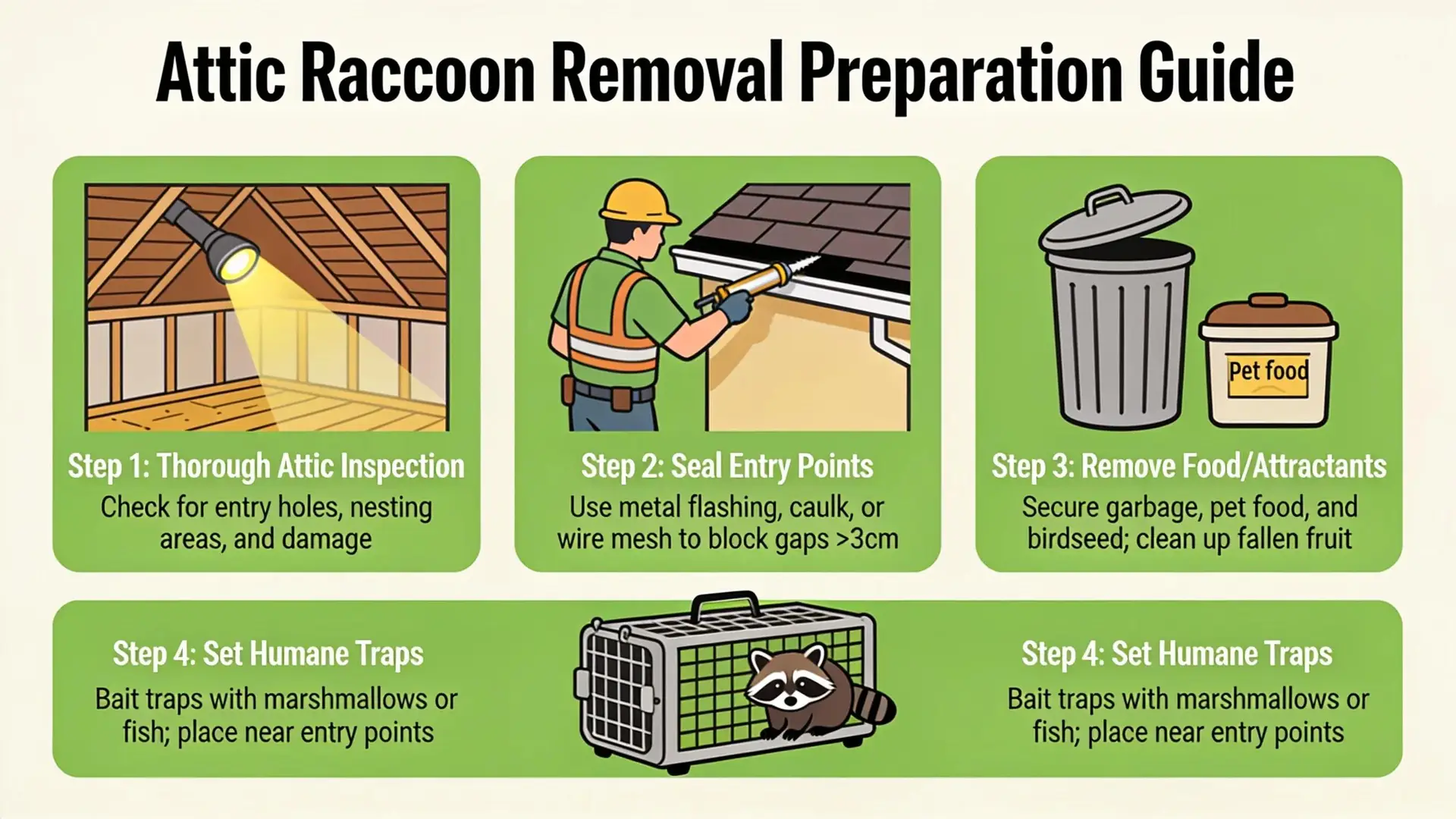
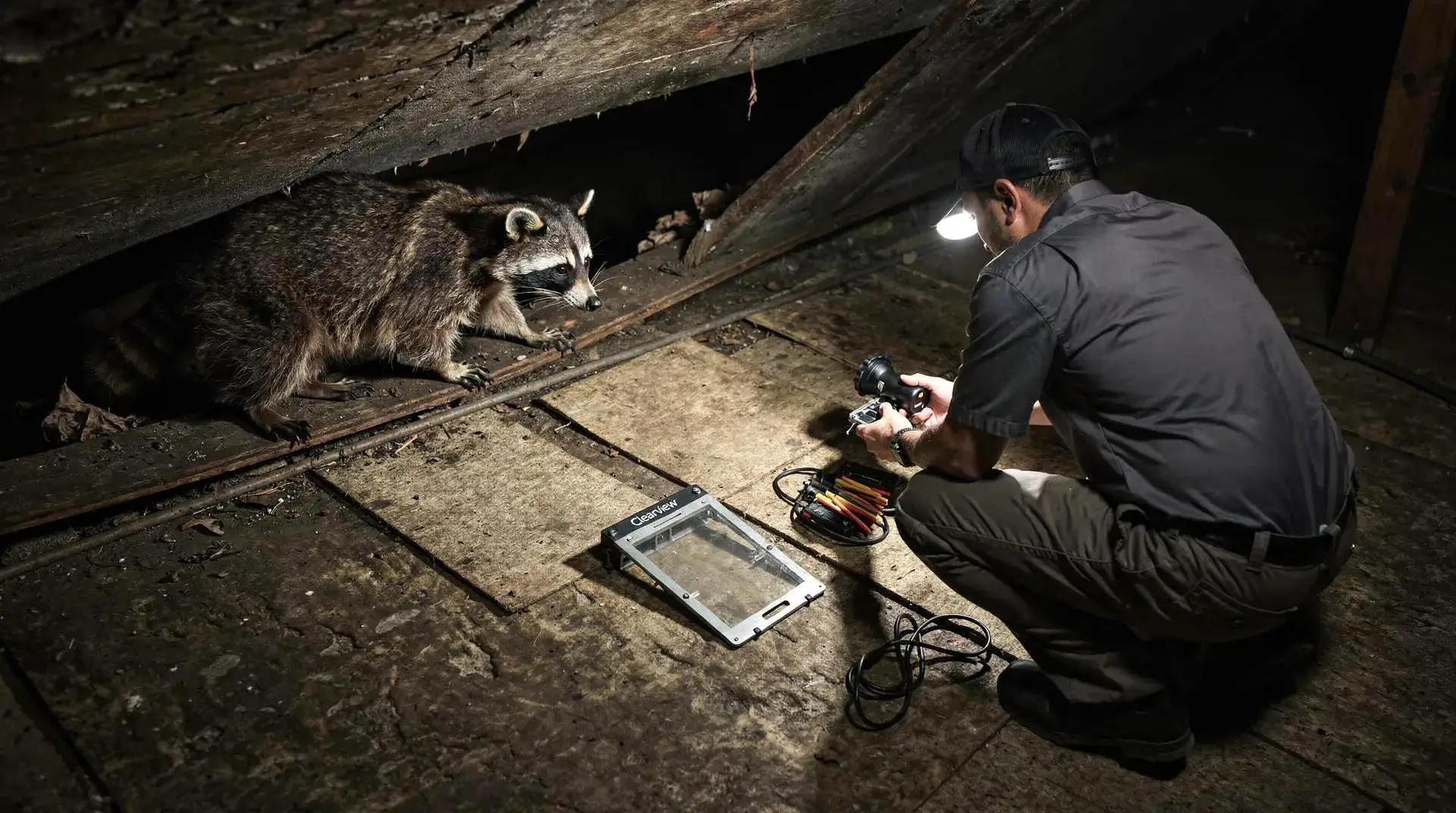
- Inspect the attic and roofline. Technicians locate scratching sounds, disturbed insulation, and entry gaps near the roof edge before touching anything.
- Confirm whether a litter is present. Raccoon mothers rarely leave young behind voluntarily, so this step shapes the entire removal plan.
- Apply humane deterrents first. Making the space less hospitable — light, noise, or mild disturbance — often prompts a mother raccoon to relocate her litter on her own, without any physical contact.
- Remove remaining animals by hand only when needed, using low-stress handling methods that avoid injury to the raccoon or the technician.
- Seal every entry point. Exclusion sealing closes gaps, vents, and roof damage so raccoons cannot return once the attic is clear.
- Repair structural damage. Chewed wood, torn vents, and compressed insulation get addressed as part of the same visit whenever possible.
Why Do Technicians Follow a Structured Removal Sequence?
Handling an adult raccoon alone carries real risk of bites, scratches, and disease exposure, which is why technicians rely on integrated pest management principles rather than trial-and-error trapping. This structured, step-by-step approach targets the root cause of the intrusion — not just the animal itself — reducing the likelihood of repeat visits at the same entry point.
What Comes After Removal Is Complete?
Attic cleanup follows raccoon removal as the next essential phase. Leftover waste, nesting material, and soiled insulation carry odor and disease risk if left behind. **attic cleanup raccoon** service targets full debris removal and, when needed, dead animal removal from hard-to-reach spaces. Skipping this step invites lingering smells and pest activity long after the raccoon is gone.
Why does the attic need cleanup after the raccoon leaves?
Nesting material and droppings hold bacteria and parasites that spread through attic air. Removing soiled insulation and sanitizing affected areas closes off those risks before they reach living spaces below.
How does Clearview confirm raccoons stay out for good?
Exclusion work alone doesn’t guarantee a raccoon-free attic forever. Clearview Pest Control pairs humane raccoon removal with ongoing monitoring. Maintenance plans, checking seals and entry points on a regular basis. That follow-through reflects the company’s core brand promise: safe, lasting solutions, not one-time fixes. Property managers and homeowners benefit further from Clearview’s Bayonne, NJ base, which supports fast response across Northern New Jersey and New York City whenever wildlife emergencies arise.
FAQ
How do you know if raccoons are living in your attic?
Raccoons are largely nocturnal, so most homeowners first notice movement or noise overhead after dark rather than during the day. Combined with signs such as compressed insulation, torn vents, or droppings near roof access points, this nighttime pattern is one of the strongest indicators of an active attic infestation.
Is it safe to remove attic raccoons without professional help?
Handling adult raccoons without training exposes homeowners to bites, scratches, and disease. It can leave animals stranded within wall or ceiling cavities. Clearview Pest Control’s licensed, insured technicians follow a structured, humane process that lowers these risks while still resolving the underlying entry point.
What steps do professionals follow to remove raccoons humanely?
Professional removal follows a defined humane sequence rather than immediate trapping: confirming occupancy, checking for a litter, encouraging natural relocation through deterrents, and only handling animals directly when deterrents alone don’t resolve the situation. This order minimizes stress on the raccoon and lowers the chance of orphaned young remaining hidden in the structure.
Conclusion
In closing, safely removing raccoons from your attic requires a combination of professional expertise, humane handling, and thorough exclusion work to prevent future entry. The process demands precision and knowledge of local wildlife regulations—elements that distinguish effective, lasting solutions from temporary fixes. By addressing both the immediate removal and the underlying structural vulnerabilities, you protect your home’s integrity and ensure the well-being of the animals involved. Professional intervention transforms a frustrating problem into a resolved situation, restoring your peace of mind and your property’s security.