
Distinguishing termite damage from carpenter ant activity is important for Bayonne homeowners. Both affect timber but in different ways. This article outlines the core identification features and simple initial checks to help you diagnose the problem and decide next steps.
Termites consume wood and favour moist conditions; carpenter ants excavate wood to build nests without eating it. Noting behaviour, appearance and the type of damage helps determine the correct response.
Focus on key morphological and behavioural differences to tell these pests apart.
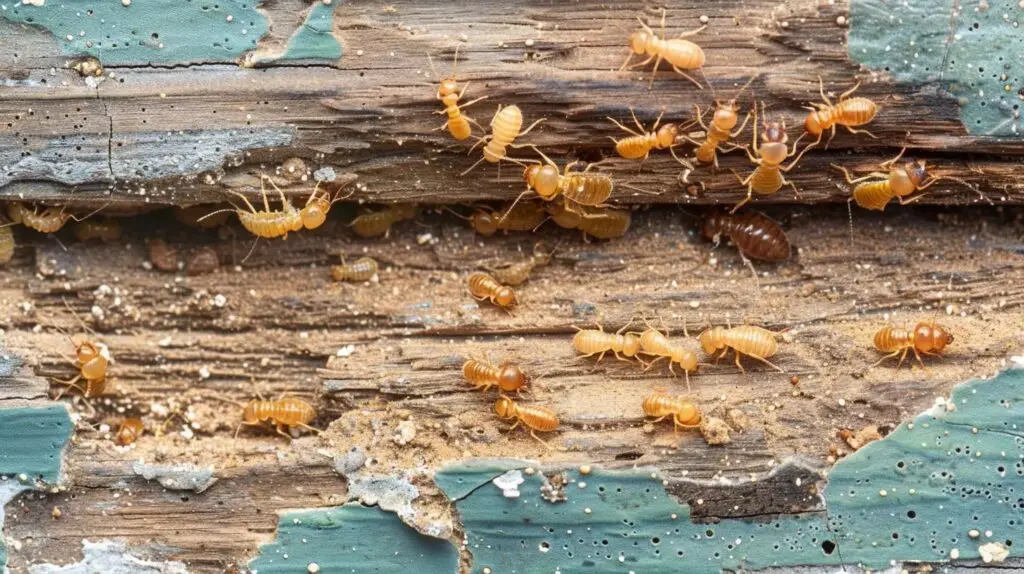
Eastern subterranean termites are soft-bodied, pale to dark brown, and lack a narrow waist. They build mud tubes, prefer damp areas, are mostly nocturnal, and swarming reproductives have equal-length wings.
Carpenter ants are larger, with a segmented body and a distinct narrow waist; colours range from black to red. They excavate smooth galleries, produce sawdust-like frass, and are more visible while foraging; alate wings are unequal in length.
Carry out these straightforward checks to narrow down the pest type.

Common indicators that warrant action include:
Distinguishing between wood consumption (termites) and nesting excavation (carpenter ants) directs the right treatment.
Understanding Wood-Destroying Insects: Termites, Beetles, and Ants
Insects are the most frequently encountered wood pests and use wood for food, shelter and reproduction. The principal wood‑destroying groups include Coleoptera (beetles) and Isoptera (termites), which are primary xylophagous pests. Secondary pests include species that breed in wood (for example, ambrosia beetles), colonising insects such as ants, and pests of stored materials (for example, hide or leather beetles).Biological deterioration of wood, 2001
Look for subtle but specific termite signs:
Monitor these signs to limit structural impact.
Carpenter ant evidence is distinct and usually visible:
Behavioral clues include:
Visual differences to note:
These traits help assess infestation type and urgency.
Careful identification is the first step toward effective control.
Wood-Damaging Insects: Termites and Beetles
This chapter reviews post‑harvest beetles and termites as principal xylophagous insects affecting wooden cultural heritage. It provides an overview of wood‑damaging taxa and presents case studies of infestations on wooden artefacts and structures.
Wood deterioration by insects, A Pournou, 2020
Combine these reliable methods:

Licensed pest professionals provide thorough diagnostics and can use specialised tools to find concealed nests and quantify damage.
Act promptly. Key immediate steps:
While awaiting professional treatment, reduce ongoing harm by:
Call a professional if you notice:
Clearview Pest Control can provide assessment and treatment options; consult their pest management solutions for details.
Inspect for mud tubes (termites) or frass and smooth galleries (carpenter ants). Tap wood for hollow areas and watch activity patterns—ants are often visible while foraging, termites are usually concealed.
Reduce moisture, remove nearby wood debris, seal structural gaps and schedule regular professional inspections to catch problems early.
Termites feed on cellulose in many woods; carpenter ants favour moist or decaying timber for nesting. Keeping structural wood dry and sound reduces both risks.
Termites mainly threaten structural integrity. Carpenter ants can spread contaminants, and damp damage can encourage mould growth, which may affect respiratory health in vulnerable people.
Have at least annual inspections and check after heavy rain or during spring swarms, especially in humid areas like Bayonne, NJ.
Contact a licensed pest professional promptly. Meanwhile, reduce moisture and seal likely entry points; delaying action raises the risk of more extensive damage.
Minor ant problems can sometimes be managed DIY, but termite and large carpenter ant infestations typically require professional intervention for reliable, long-term control.
Accurate identification of termites versus carpenter ants is essential to protect your Bayonne property and choose the right treatment. Use the signs and checks above and consult a qualified pest control professional for a full inspection and tailored management plan.