


This year, homeowners in Bergen County are noticing an early emergence of carpenter ants and bees, a phenomenon that can be attributed to several interrelated environmental factors. One of the primary reasons for this shift is the warmer-than-usual temperatures experienced in the region during the early spring months. As temperatures rise, both carpenter ants and various bee species become active sooner, as they respond to cues in their environment that signal it’s time to seek food, build nests, and reproduce. Inhibiting the typical lifecycle of these insects, milder winters may also prevent the natural die-off of some populations, allowing them to thrive earlier in the season.
The primary driver behind the early appearance of carpenter ants and bees is the shift in seasonal weather patterns. Warmer temperatures in late winter and early spring accelerate the development and activity cycles of these insects. This early warmth signals them to emerge from their dormant states sooner than usual.
Moreover, reduced snowfall and milder winters mean that fewer insects succumb to cold-related mortality. This survival boost results in larger populations ready to forage and reproduce earlier in the year. Climate change trends have been linked to these shifts, highlighting the broader impact of global warming on local insect behavior. For more insights on pest behavior and management, visit the Clearview Pest Control blog.
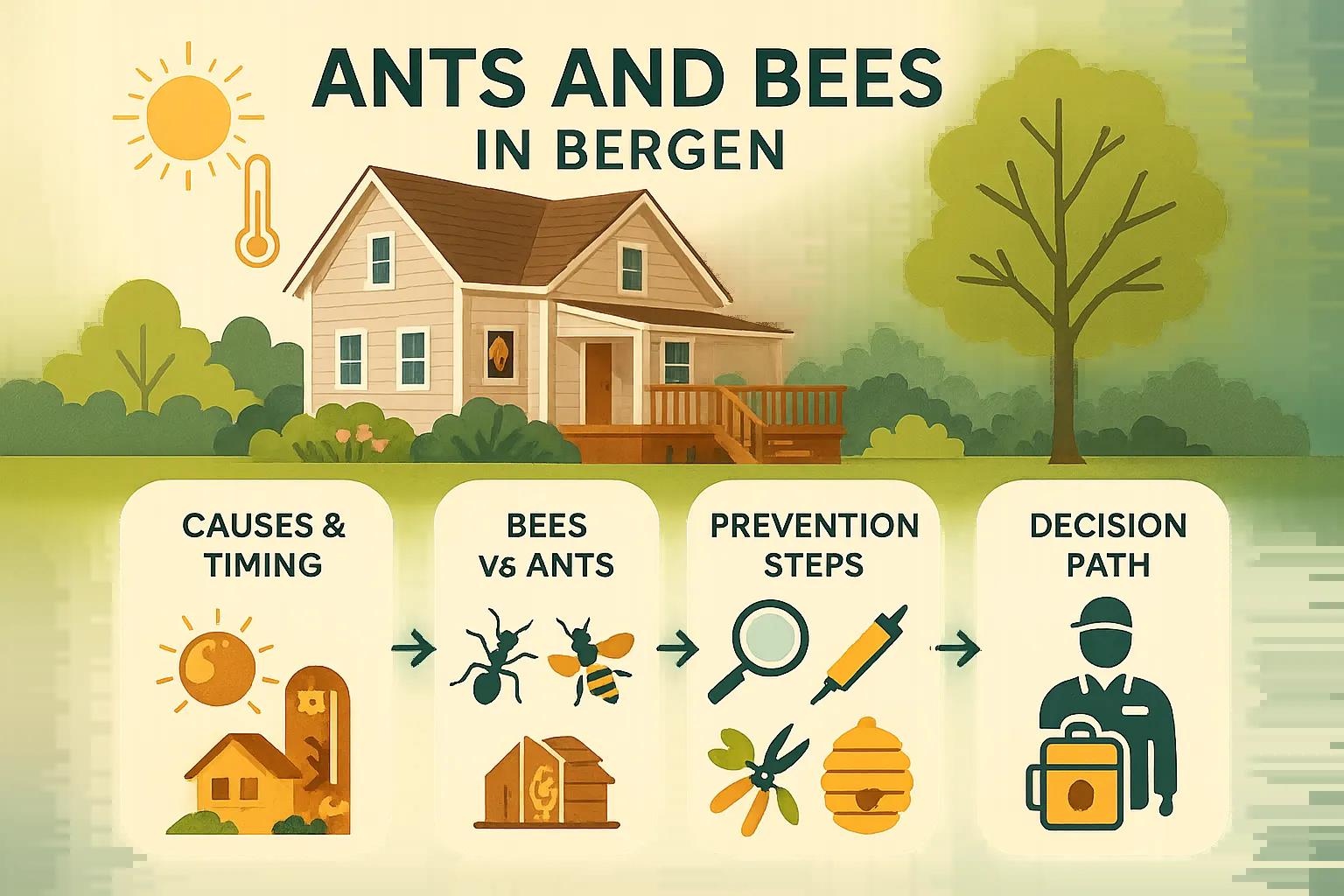
Urban expansion in Bergen County has transformed natural habitats, often creating favorable conditions for carpenter ants and bees. The increase in flowering plants, ornamental trees, and shrubs in residential yards provides ample nectar and pollen sources for bees, while wooden structures and mulch beds offer ideal nesting sites for carpenter ants.
Landscaping choices, such as the use of untreated wood and dense vegetation near homes, can inadvertently encourage these insects to settle close to human dwellings. Homeowners should be aware of how their gardening and maintenance practices influence local insect populations. Professional advice on landscaping to deter pests can be found at Clearview Pest Control’s services.
While carpenter ants and bees are important for the environment, their early and increased presence can pose problems. Carpenter ants can cause structural damage by hollowing out wood to build their nests, potentially compromising the integrity of homes. Bees, although beneficial pollinators, may become a nuisance or safety concern if they establish hives near high-traffic areas.
Early activity means that infestations or hives can become well-established before homeowners typically begin pest control measures. This can lead to more extensive damage or increased risk of stings, especially for individuals allergic to bee venom. For professional assistance, consider contacting ant control or bee control experts at Clearview Pest Control.
To mitigate the impact of early carpenter ant and bee activity, homeowners should adopt proactive strategies:
Early detection and intervention are key to managing these insects effectively and minimizing their impact on homes and families. For comprehensive pest management solutions, visit Clearview Pest Control.
As climate patterns continue to evolve, Bergen County residents may see further shifts in the behavior and timing of local insect populations. Community awareness and education about these changes will be essential in developing effective responses.
Collaboration between homeowners, pest management professionals, and local environmental agencies can foster strategies that balance the ecological benefits of carpenter ants and bees with the need to protect property and public safety. Learn more about the areas served by Clearview Pest Control, including Bergen County and surrounding regions.
Signs of a carpenter ant infestation include the presence of sawdust-like material, which is actually wood shavings, and rustling sounds coming from walls or wooden structures. You may also notice small holes in wood surfaces where ants have entered. Additionally, seeing the ants themselves, especially during warmer months, can indicate an active colony nearby. Regular inspections of wooden structures, especially in spring, can help catch infestations early before they cause significant damage. For professional inspections and treatments, visit Clearview Pest Control’s ant control service.
Removing a bee hive should be approached with caution, as bees can become aggressive when threatened. It is best to contact a professional pest control service that specializes in bee removal. They can safely relocate the hive without harming the bees, which are vital pollinators. If you choose to handle it yourself, wear protective clothing and use smoke to calm the bees, but be aware that this can be risky, especially for those allergic to bee stings. Professional bee removal services are available at Clearview Pest Control.
Bergen County is home to various bee species, including honeybees, bumblebees, and solitary bees like mason bees. Honeybees are social insects that live in colonies, while bumblebees are larger and also form colonies but are less aggressive. Solitary bees, such as mason bees, do not live in colonies and are often found nesting in small holes. Understanding the types of bees in your area can help you manage their presence effectively while appreciating their ecological roles.
Climate change significantly impacts insect populations by altering their life cycles, reproduction rates, and seasonal behaviors. Warmer temperatures can lead to earlier emergence from dormancy, increased survival rates during milder winters, and shifts in habitat availability. These changes can result in larger populations of insects like carpenter ants and bees, which may disrupt local ecosystems and human activities. Monitoring these trends is crucial for adapting pest management strategies and maintaining ecological balance. For more information on climate impacts and pest control, visit Clearview Pest Control’s blog.
To deter carpenter ants, homeowners should adopt landscaping practices that minimize their attraction to properties. This includes using treated wood for decks and structures, keeping mulch and wood piles away from the home, and trimming vegetation to create a barrier. Additionally, removing decaying wood and ensuring proper drainage can reduce moisture levels that attract these pests. By creating an inhospitable environment, you can significantly lower the chances of an infestation. For expert advice, consult Clearview Pest Control’s repairs and exclusions service.
Yes, several natural remedies can help repel bees without harming them. Planting herbs like mint, basil, and citronella can deter bees due to their strong scents. Additionally, using essential oils such as peppermint or eucalyptus in a diluted spray can create a barrier that bees tend to avoid. However, it’s important to remember that bees are beneficial for pollination, so these methods should be used to manage their presence rather than eliminate them entirely.
If you are allergic to bee stings, it is crucial to take preventive measures to avoid encounters with bees. Always carry an epinephrine auto-injector (EpiPen) if prescribed by your doctor. Inform family and friends about your allergy, and consider wearing protective clothing when outdoors. If you notice bee activity near your home, contact a professional for safe removal of hives. In case of a sting, seek immediate medical attention if you experience severe reactions such as difficulty breathing or swelling.
Understanding the early emergence of carpenter ants and bees in Bergen County highlights the importance of adapting to changing environmental conditions. By recognizing the factors driving these shifts, homeowners can take proactive measures to protect their properties while appreciating the ecological roles of these insects. Implementing effective pest management strategies is essential for maintaining a harmonious balance between nature and residential spaces. Stay informed and explore additional resources to enhance your pest control efforts today by visiting Clearview Pest Control.